- info@tryinotech.com
- Kuri Road, Islamabad

AI Agents vs. Chatbots: What's the Difference and Which Does Your Business Actually Need?
09
Jul
Introduction
"AI agent" is 2026's favorite buzzword — and it's getting slapped on products that are really just chatbots with better marketing. This post cuts through the hype with one clear rule readers can actually use: if the job is to answer, you need a chatbot; if the job is to act, you need an agent. It positions Inotech as the partner who won't oversell a $50,000 agent build when a $5,000 chatbot solves the problem — which builds exactly the kind of trust that turns into long-term clients.
This ties directly into your AI Automation service and the free AI Automation Audit tool — perfect bottom-of-funnel CTA.
What to Cover
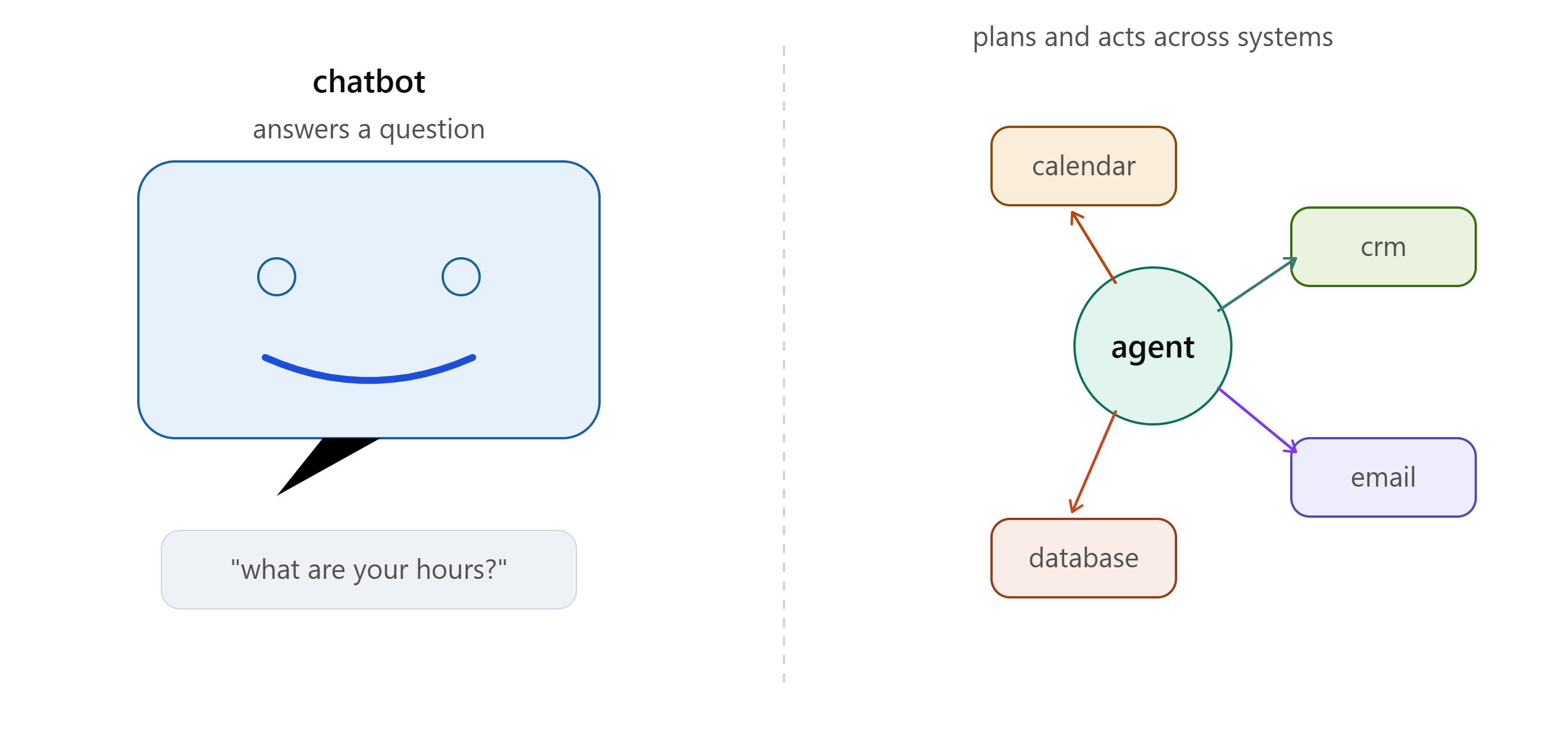
The core distinction to build the whole post around is simple: a chatbot responds, while an AI agent reasons, plans, and acts across multiple systems without a human pushing every button. Chatbots are essentially read-only — they retrieve information and reply. Agents are read-write, meaning they can actually update a CRM, send an email, reschedule a booking, or escalate a ticket on their own. Make this concrete with a side-by-side example readers will recognize immediately: a chatbot handles "what are your business hours?" with an instant scripted or RAG-based answer, while an agent handles "reschedule my appointment to next Tuesday" by checking the calendar, updating the booking, confirming the change, and sending a reminder — all without anyone doing it manually.
It's worth including a warning about "agent-washing," since many vendors are now rebadging simple retrieval chatbots as "AI agents" purely for marketing purposes. Give readers a quick, practical way to spot the difference, since this protects them from overpaying for something that isn't what it claims to be. Follow this with an honest cost reality check: agents typically cost more to build and run per interaction than chatbots, because they use more tokens for planning and tool calls and need stronger guardrails around them — but the payoff is real task completion, not just faster replies. It's also worth grounding the piece in the current moment: agentic AI is moving quickly from demo to production in everyday business tooling, and more enterprise applications are expected to include task-specific agents through 2026, so this isn't a distant trend but something happening in real deployments right now.
Close the educational portion with a simple three-question decision framework readers can apply to their own business: does this task only require an answer, or does something need to actually change in a system like a CRM, calendar, or inventory tool? Are there multiple steps or branching decisions involved, rather than a single lookup? And is the volume high enough that even "good enough" automation would save real hours each week? These three questions alone should be enough for most readers to know which side of the chatbot-versus-agent line they fall on.
Don't let this post become a one-sided agent sales pitch — it needs an honest section on when a simple chatbot is actually the smarter, cheaper choice. That includes businesses with simple, repetitive FAQ volume, regulated industries that need pre-approved and deterministic responses rather than generated ones, and very high-volume, very simple interactions like balance checks, where the added overhead of an agent isn't worth it. This honesty is exactly what separates Inotech from agencies that push "agent" as a premium upsell regardless of whether it actually fits the client's problem — and it's worth stating that plainly in the post.